
As we navigate the first month of 2026, the definition of “video marketing” has undergone a radical transformation. Last year, 2025, was the year the industry moved from manual production to what we now call Autonomous Video Content. In this landscape, a “video” is no longer just a static file; it is a dynamic, multi-language, platform-optimized asset that finds its audience through predictive AI. If your brand is still debating whether to “start” video, you are effectively invisible to over 82% of internet traffic—the percentage of total global bandwidth now consumed by video content.
The Early 2026 “Semantic Video Evolution” has introduced tools that can read a 3,000-word whitepaper and, in under 60 seconds, generate a fully edited 9:16 vertical video for TikTok, a 16:9 explainer for YouTube, and a personalized video message for your top 50 sales leads. The barrier to entry has vanished, but the barrier to relevance has shifted toward quality and personalization. To save you from the “software fatigue” of 2025, we have curated the essential toolkit for a high-performing video strategy in 2026.
—
2026 Video Marketing Powerhouse Table
| Tool | Starting Price (2026) | Unique Selling Point (USP) | GrowthPick Rating |
|---|---|---|---|
| CapCut Desktop | Free / $9.99/mo (Pro) | AI Script-to-Video & Prosumer Speed | 4.9 / 5.0 |
| HeyGen | $24/mo (Starter) | Near-Perfect Multilingual Voice Cloning | 4.8 / 5.0 |
| Descript | $12/mo | Text-Based Editing & AI “Underdub” | 4.7 / 5.0 |
| Vidyard | Free / $19/mo (Pro) | Sales-First CRM Analytics & Heatmaps | 4.6 / 5.0 |
| Wistia | $19/mo | Best-in-Class Lead Capture & Hosting | 4.5 / 5.0 |
—
The Creation Engine: Moving from Script to Screen in Seconds
In early 2026, the most significant productivity gain has come from Generative Scripting. Tools like CapCut Desktop have transitioned from simple editors to full-scale “Content Laboratories.” Their January 2026 “Visionary 4.0” update now allows users to input a URL or a rough thought, and the AI handles the entire “A-Roll” assembly, including matching B-roll from an internal 8K stock library and generating a natural-sounding voiceover in over 30 accents.
For small businesses, this eliminates the “blank page syndrome.” You no longer need to hire a scriptwriter or an editor for every social post. The ROI here is staggering; what used to take a creative team five hours now takes a solo marketer fifteen minutes. However, the caveat in 2026 is Authenticity. While CapCut can build the structure, the brands winning today are those that overlay their AI-generated frames with authentic, “lo-fi” human-shot footage to maintain trust.
The Global Reach: HeyGen and the Death of Language Barriers
One of the most disruptive trends of 2025 was the rise of Globalized Localism. In 2026, your potential market is no longer limited to your native language. HeyGen has pioneered a technology that doesn’t just dub your video; it clones your voice and adjusts your lip-syncing to match the target language perfectly.
The early 2026 “Cultural Nuance” update in HeyGen now goes a step further by adjusting the tone and gestures of the AI avatar to suit local cultural norms (e.g., using more formal language for Japanese markets versus a casual tone for Brazilian audiences). For a startup looking to expand into Europe or Asia, this tool eliminates the $10,000+ cost of professional localization. You record once in English, and HeyGen distributes it in Spanish, Mandarin, and Hindi—maintaining your brand’s unique voice across all of them.
—
The Workflow Optimizer: Editing Video Like a Word Document
If you find traditional “timeline” editing intimidating, Descript is your 2026 savior. Descript treats video like a text transcript. If you want to delete a sentence from your video, you simply highlight the text in the transcript and hit delete. The video magically adjusts.
In January 2026, Descript launched its “Dynamic Underdub” feature. If you made a mistake in your recording (e.g., you said “2024” instead of “2026”), you can simply type the correct word into the transcript, and Descript’s AI will regenerate that specific audio segment using your cloned voice, perfectly matching the room’s acoustics. This feature alone saves hours of re-recording. For educational content and podcasts, Descript has become the industry standard, effectively turning every team member into a proficient video editor.
The Conversion Specialist: Vidyard vs. Wistia
While tools like CapCut and HeyGen focus on creation, Vidyard and Wistia focus on conversion. In the sales-driven environment of 2026, “views” are a vanity metric; “engagement depth” is the gold standard.
- Vidyard (The Sales Engine): Vidyard’s early 2026 CRM integration (Salesforce/HubSpot) allows sales reps to see exactly when a prospect watched a video and which parts they re-watched. Imagine calling a lead exactly 30 seconds after they finished watching your “Pricing” video—that is the level of precision Vidyard offers.
- Wistia (The Marketing Hub): Wistia is the superior choice for lead generation on your website. Its 2026 “Interactive Turnstile” feature allows you to embed polls and lead-capture forms directly inside the video player. It also provides the best SEO metadata injection, ensuring your videos rank on the first page of Google’s new AI-driven search results.
—
Strategic Verdict: Which Tool Should You Choose?
Winner for Social Media & Small Business: CapCut + Buffer
If you need to pump out high volumes of TikToks, Reels, and YouTube Shorts on a budget, CapCut is the winner. Its AI features are miles ahead of the competition for “prosumer” level content. Pair it with a scheduler like Buffer for a complete 2026 workflow.
Winner for B2B Sales & Enterprise: Vidyard
If your videos are meant to close five-figure deals, Vidyard is the winner. The depth of analytics and the ability to track individual viewer behavior makes it an indispensable part of the modern sales stack.
Winner for Global Creators & Education: HeyGen + Descript
If you are building an international brand or an online course, the combination of HeyGen (for localization) and Descript (for fast editing) is the “God Mode” of 2026 video marketing. You will save hundreds of hours and thousands of dollars in production costs.
—
Frequently Asked Questions (FAQ)
1. Do I still need a professional camera in 2026?
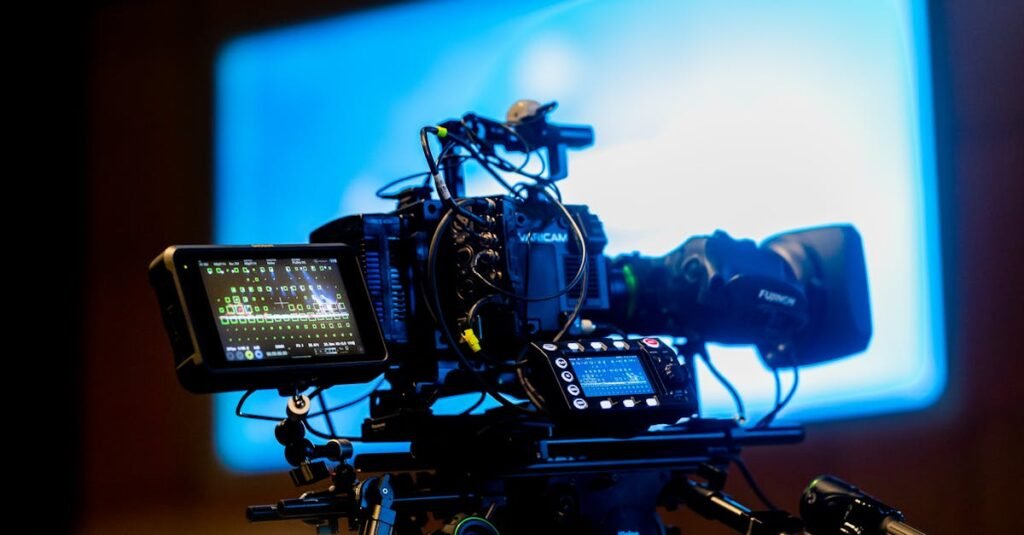
For 90% of marketing needs, no. The 2026 smartphone cameras combined with AI-upscaling tools (like Topaz Video AI or CapCut’s native “Enhance” feature) produce 4K footage that is indistinguishable from professional rigs on mobile screens. A professional camera is now only necessary for high-end cinematic commercials or large-format studio work.
2. Is AI-generated video “safe” for my brand?
Yes, provided you use reputable platforms that use licensed training data. In late 2025, major copyright laws were enacted to protect brands using AI. Tools like Adobe Express (using Firefly) and CapCut provide “Commercial Use” guarantees, ensuring you won’t face legal hurdles for the stock elements or AI voices you use.
3. How long should my marketing videos be in 2026?
The “90-Second Rule” still dominates. Data from 2025 shows that audience retention drops by 50% after the 90-second mark for top-of-funnel content. However, for educational webinars and deep-dive demos, we are seeing a resurgence in long-form content (20+ minutes), as long as it is chaptered correctly using AI tools like Descript for easy navigation.
Best Video Marketing Tools in 2026 (Don’t Choose Wrong)
This video provides a practical comparison of AI video editing tools in 2026, helping you understand which platforms offer the best value for scaling content creation.