

Make Money Online

Proven strategies for generating passive income, dropshipping tutorials, and affiliate marketing guides for entrepreneurs and freelancers.

A young woman unpacks online shopping orders in a stylish modern kitchen, using her laptop for work.

Shopify vs. WooCommerce: The Honest Truth for Beginners

Welcome to the e-commerce landscape of January 2026. If you are looking to launch an online store today, the “barrier to entry” has practically vanished, but the “barrier to success” has never been higher. Last year, 2025, saw the final consolidation of the “AI-First” storefront, where simply having a list of products is no longer enough. Customers now expect hyper-personalized shopping journeys, instant AR (Augmented Reality) previews, and seamless checkout via global digital currencies. For beginners, the choice remains a fundamental fork in the road: Shopify, the all-in-one SaaS powerhouse, or WooCommerce, the open-source champion of flexibility. In early 2026, both platforms have undergone significant transformations. Shopify has integrated its “Sidekick” AI into every facet of the dashboard, while WooCommerce has finally streamlined its “Woo Express” offering to compete directly with the “easy-to-use” crowd. This guide provides a data-driven breakdown of which platform will serve your business best in this high-velocity year. 2026 Snapshot: Shopify vs. WooCommerce Metric Shopify (2026) WooCommerce (2026) Ease of Use Extreme (Plug-and-play) Moderate (Steeper learning curve) Setup Cost $39/mo (Basic) + Apps $10-$50/mo (Hosting + Plugins) AI Integration Native “Sidekick” (Predictive) Plugin-based (Highly customizable) Ownership Rented (SaaS) Owned (Open Source) Overall Rating 4.9/5 4.7/5 Ease of Use: The “Weekend Warrior” Test In 2026, time is your most valuable asset. Shopify remains the undisputed king of the “Weekend Warrior”—the entrepreneur who wants to sign up on Saturday and sell by Sunday. The January 2026 “One-Click Store” update has further simplified the process. By answering five questions about your niche, Shopify’s AI now generates a complete theme, writes initial product descriptions, and sets up your tax/shipping logic automatically. WooCommerce, while significantly improved by the 2025 “Gutenberg-First” commerce blocks, still requires a multi-step setup. You need to secure hosting, install WordPress, and then configure the WooCommerce plugin. While the new “Woo Express” hosting plans mimic the Shopify experience, you are still ultimately managing a “stack” of software. If you enjoy tinkering with settings and want to understand the “pipes” of your website, WooCommerce is rewarding. If you want the software to “just work” so you can focus on marketing, Shopify is the superior choice. The Hidden Costs of 2026 E-commerce Beginners often make the mistake of looking only at the monthly subscription fee. To get an “Honest Truth” view, we must look at the Total Cost of Ownership (TCO). Shopify’s “App Tax” Shopify’s base price is predictable, but to compete in 2026, you will likely need third-party apps for advanced loyalty programs, specialized SEO tools, or complex bundles. These monthly subscriptions can quickly turn a $39/mo store into a $150/mo overhead. Furthermore, unless you use Shopify Payments, you are hit with transaction fees that eat into your margins. WooCommerce’s “Maintenance Fatigue” WooCommerce is technically “free,” but high-quality hosting for a fast store in 2026 costs at least $25/mo. Then there are the costs for premium themes and plugins (many of which are annual licenses). The biggest hidden cost in WooCommerce is time. Last year, many store owners reported “update fatigue”—the need to manually test plugin compatibility every time WordPress or Woo releases a core update. If you have to hire a developer to fix a broken checkout page, your “free” software just became very expensive. AI and Automation: Who Wins the Tech Race? Artificial Intelligence is no longer a “feature”—it is the engine. In 2026, the gap between these two is about Integrated vs. Modular AI. Shopify Sidekick: Shopify’s native AI is now proactive. It will message you: “I noticed your conversion rate dropped on mobile in the UK. Should I optimize your image delivery and suggest a 10% discount for London-based IP addresses?” This level of integrated intelligence is incredibly powerful for beginners who aren’t data analysts. WooCommerce AI: Woo relies on the massive WordPress plugin ecosystem. While you can find incredibly specific AI tools for everything from image generation to chatbots, they don’t always “talk” to each other perfectly. However, for the privacy-conscious beginner, WooCommerce allows you to run local AI models on your own server, ensuring your customer data isn’t being fed back into a proprietary SaaS loop. SEO and Content Marketing In 2026, Google’s “Search Generative Experience” favors deep, authoritative content. Since WooCommerce is built on WordPress, the world’s most powerful blogging platform, it still holds a slight edge for content-heavy brands. If your strategy involves long-form guides, complex tutorials, or a heavy reliance on organic SEO, WooCommerce’s flexibility in metadata and URL structure is unmatched. Shopify has made massive strides, however. The “locked-down” SEO issues of 2023 are gone. Beginners can now edit every critical SEO element, and Shopify’s global CDN ensures that your site speed—a critical ranking factor in 2026—is top-tier without you having to configure a single server setting. Design and Customization: Beyond the Template The “Standard Web Look” died in 2024. In 2026, consumers want immersive, unique brand experiences. Shopify uses the “Liquid” templating language. It is incredibly stable and looks professional out of the box. The limitation is that if you want to move an element two inches to the left, and there isn’t a toggle for it in your theme, you are going to need a developer. It’s a “walled garden” that is beautifully manicured but difficult to remodel. WooCommerce is an open field. With tools like Elementor, Divi, or the native Block Editor, you have pixel-perfect control over every inch of your site. If you have a very specific vision for a “weird” or avant-garde store design, WooCommerce will let you build it without fighting the platform. The Verdict: Which is Better for You in 2026? Winner for the “Pure Beginner”: Shopify If this is your first business and you have more money than time, Shopify is the winner. It removes the technical anxiety of running a website. You don’t have to worry about servers, security patches, or database optimization. You pay a premium for peace of mind, allowing you to focus entirely on product development and customer acquisition. Winner for the “Tech-Savvy Creator”: WooCommerce If

Shopify vs. WooCommerce: The Honest Truth for Beginners Read More »
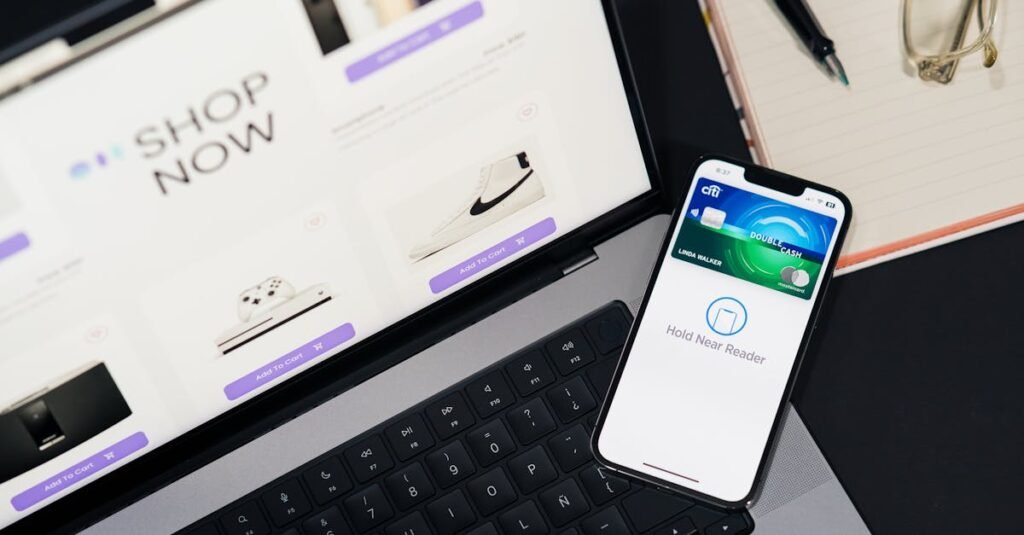
Laptop showing e-commerce site with a smartphone for mobile payment. Ideal for tech and shopping themes.

Payment Gateways Comparison: Stripe vs. PayPal

Stripe vs. PayPal: The Ultimate Payment Gateway Comparison for 2026 Welcome to the era of “Invisible Commerce.” As of January 2026, the traditional checkout button is becoming an artifact of the past. Last year, 2025, marked the tipping point where AI agents began negotiating and executing payments on behalf of consumers. Today, choosing a payment gateway isn’t just about picking a processor; it’s about choosing which ecosystem’s AI will drive your sales. In early 2026, the competition between Stripe and PayPal has escalated beyond transaction fees. Stripe has leaned heavily into its “Agentic Commerce” framework, allowing autonomous AI to manage multi-currency ledgers, while PayPal has leveraged its massive consumer network by integrating directly into ChatGPT and Google’s Universal Commerce Protocol (UCP). Whether you are a solo-preneur launching a SaaS or a retail veteran moving into global markets, the “Stripe vs. PayPal” debate has evolved into a high-stakes strategic choice. This data-driven review breaks down the 2026 landscape to help you decide where to anchor your revenue. 2026 Executive Summary: Stripe vs. PayPal Feature Stripe (2026) PayPal (2026) Standard US Fee 2.9% + $0.30 2.99% + $0.49 (Standard Credit) Consumer Reach 5.5M+ Businesses 435M+ Active Users Best For Developers, SaaS, & Global Scale Retailers, Freelancers, & Trust-Building Crypto Support Native Stablecoin Subscriptions 40% Merchant Adoption (Jan 2026) Support Rating 4.8/5 (24/7 Availability) 3.9/5 (Improving, but limited hours) Developer Freedom vs. Consumer Trust: The Core Conflict In 2026, the primary reason to choose Stripe remains its unparalleled developer experience. Stripe’s API remains the gold standard for flexibility. With the March 2026 User Terms Update, Stripe has increased liability caps and confidentiality protections, making it even more attractive for high-volume enterprises. If you want to build a custom checkout flow that feels like a native part of your app, Stripe “Elements” allows you to do so with minimal code, while still maintaining Level 1 PCI compliance. Conversely, PayPal wins on the “Trust Factor.” Even in 2026, a significant segment of the population—particularly Gen X and Baby Boomers—hesitates to enter credit card details into a new website. The PayPal “One-Click” button is a psychological safety net. Last year’s data showed that adding PayPal as a secondary payment option increased conversion rates by up to 18% for new brands. For a beginner, PayPal’s ease of setup is its greatest weapon; you can literally start accepting payments with an email address and a few clicks. Agentic Commerce: The 2026 Growth Engine The most exciting update for January 2026 is the rollout of “Agentic Commerce” services. This is where the two giants have diverged significantly in their strategy. PayPal’s AI Integration (The ChatGPT Factor) Following their October 2025 announcement, PayPal has officially integrated with OpenAI’s ChatGPT. In early 2026, users can now ask ChatGPT to “Find me a sustainable leather jacket under $200” and complete the purchase via PayPal Instant Checkout without ever leaving the chat interface. For merchants, this means your product catalog is now discoverable within the world’s most popular AI assistant. If your business relies on retail and discovery, PayPal’s ecosystem lock-in is currently unbeatable. Stripe’s Agentic Ledgering Stripe has taken a “back-end” approach to AI. Their 2026 AI updates focus on Revenue Recognition and Autonomous Billing. Stripe’s AI agents can now automatically adjust subscription pricing for global users based on real-time inflation and local purchasing power parity. For a SaaS business, this means “set and forget” global scaling. Stripe’s agents also handle complex accrual accounting, closing your books daily with 99.9% accuracy—a feature that was a manual nightmare just two years ago. Video Comparison: Setting Up Your Gateway in 2026 For a visual walkthrough of the new 2026 dashboards, check out this comprehensive breakdown: Watch: Stripe vs. PayPal – Which One Should You Choose? (2026 Merchant Edition) Fees and Global Scaling: Counting the Cents For a small business, a 0.5% difference in fees can be the difference between a profitable month and a loss. In 2026, the fee structure remains complex. Domestic Processing: Stripe is generally cheaper for standard credit card transactions (2.9% + $0.30). PayPal’s standard rate has climbed to 2.99% + $0.49, which hits businesses with a low Average Order Value (AOV) particularly hard. International Transactions: This is where Stripe shines. It supports over 135 currencies and offers significantly better exchange rates. PayPal’s currency conversion fees in 2026 still hover between 3% and 4%, which can be a dealbreaker for global wholesalers. Stablecoins: A major shift in January 2026 is the mainstream adoption of stablecoins (like USDC). Stripe now supports stablecoin balances for US and UK users, allowing you to settle funds instantly without waiting for the traditional banking system. PayPal has followed suit, with a recent survey showing that 4 in 10 US merchants now accept some form of digital asset. Security, Disputes, and the “Radar” Advantage Fraud in 2026 has become highly sophisticated, with AI-generated “friendly fraud” becoming a major headache for e-commerce. Stripe Radar remains the most advanced fraud-prevention tool in the industry. It uses machine learning trained on millions of global transactions to block suspicious payments before they happen. In 2026, Radar now includes “Biometric Verification” as a standard feature, allowing you to challenge suspicious transactions with a quick FaceID or fingerprint check from the customer. PayPal, on the other hand, offers superior Buyer and Seller Protection. While their dispute resolution process is often criticized by merchants for being “buyer-biased,” it provides a level of security that consumers love. If you are selling high-ticket items or physical goods that are prone to shipping disputes, PayPal’s mediation can be a double-edged sword: it keeps customers happy but can be frustrating for the merchant to navigate. The Verdict: Which Should You Choose? Winner for Startups, SaaS, and Developers: Stripe If you are building a modern, tech-forward business, Stripe is the winner. Its 2026 AI-driven revenue tools, superior international fee structure, and developer-first APIs make it the only logical choice for businesses looking to scale globally without technical debt. Winner for Solopreneurs, Retailers, and In-Person Sales: PayPal If you

Payment Gateways Comparison: Stripe vs. PayPal Read More »

Alarm clock near pen container with cup and laptop on table placed near silhouettes of world map on wall

Best Website Builders for Non-Techies

Entering 2026, the barrier to creating a professional web presence has practically vanished. However, a new challenge has emerged: feature fatigue. In 2025, we saw a massive influx of “AI-first” tools that promised to build sites in seconds, but often at the cost of brand soul and SEO control. For the non-technical founder or small business owner, the goal isn’t just a “fast” website—it’s a functional, scalable, and manageable one. As the Chief Software Analyst at TheGrowthPick.com, I’ve spent the last year stress-testing the industry’s heavy hitters. Below is our objective breakdown of the best website builders for non-techies in 2026. 2026 Core Market Comparison Platform Starting Price (Monthly) Best For AI Capabilities Learning Curve Wix $17.00 Small Businesses / General Use Conversational AI Builder Low Squarespace $16.00 Creatives & Portfolios Blueprint AI (Design-focused) Medium-Low Hostinger $2.49 Budget-Conscious Starters One-click generation Easiest Shopify $29.00 E-commerce Power Users AI Product Copy & Magic Media Medium 1. Wix: The Versatility King Wix remains our top recommendation for most users in 2026. Following their 2025 “Business Launcher” update, the onboarding process is now entirely conversational. You tell the AI what you do, and it generates not just a layout, but a functional booking system or storefront integrated with your local currency. Pros: Unrivaled flexibility; over 900 templates; robust app market for specialized needs. Cons: Once you choose a template, switching the core structure remains difficult compared to block-based competitors. 2. Squarespace: The Aesthetic Authority If your business relies on visual impact—think photography, high-end dining, or interior design—Squarespace is the gold standard. Their 2025 “Fluid Engine” refinements have made mobile-responsive design much more intuitive for those who lack an eye for spacing. Pros: Stunning “designer-grade” templates; best-in-class built-in blogging and SEO tools. Cons: The editor can feel “stiffer” than Wix; pricing has seen steady increases over the last two years. 3. Hostinger: The Value Disruptor Hostinger’s rise in 2025 was fueled by their aggressive pricing. For the price of a cup of coffee, you get a surprisingly capable drag-and-drop editor. It is the “no-frills” choice for those who need a landing page or a basic business site without the $200+ annual commitment of other platforms. Pros: Cheapest entry point in the market; incredibly fast server performance; includes free email. Cons: Limited advanced features; e-commerce capabilities are basic compared to Shopify or Wix. The Verdict: Which One Should You Choose? Choosing the “best” builder depends entirely on your primary objective for 2026: Choose Wix if you want a “do-it-all” platform that grows with you and offers the most creative freedom. Choose Squarespace if your brand’s visual identity is your #1 priority and you want a curated, professional look. Choose Hostinger if you are testing a new idea on a tight budget and need a site live in under 30 minutes. Choose Shopify if your website is purely a vehicle for selling physical products at scale. Frequently Asked Questions (FAQ) 1. Can I switch from one builder to another later? Technically, yes, but it’s a manual process. You cannot “export” a Wix site directly into Squarespace. You will have to move your content and redesign the layout from scratch, though most SEO settings can be migrated via 301 redirects. 2. Do I need to buy a separate domain? Most builders (Wix, Squarespace, Hostinger) include a free domain for the first year. However, we recommend purchasing through a third-party registrar like Namecheap or Cloudflare for better long-term control and lower renewal fees. 3. Is “AI-generated” content good for SEO in 2026? Search engines in 2026 prioritize Experience, Expertise, Authoritativeness, and Trustworthiness (E-E-A-T). While AI can draft your pages, you must edit them to include personal expertise. Raw AI-generated sites often struggle to rank for competitive keywords.

Best Website Builders for Non-Techies Read More »

A woman wearing a VR headset and gloves immersed in a virtual reality experience inside a dimly lit room.

Affiliate Marketing 101: A Guide for Passive Income

For over a decade, the “Passive Income” dream was built on a simple, fragile foundation: rank a review site on the first page of Google, sprinkle in some Amazon Associates links, and wait for the commissions to roll in. By January 2026, that foundation has effectively dissolved. The rise of Search Generative Experiences (SGE) and AI-first discovery engines has rendered “thin” affiliate content obsolete. Today, the 10 blue links are gone, replaced by agentic workflows that summarize product specs before a user ever clicks a website. However, the affiliate industry is not dying; it is undergoing a sophisticated metamorphosis. In 2026, successful affiliate marketing is no longer about “traffic arbitrage”—it is about trust arbitrage. As consumers become weary of AI-generated sludge, the value of a verified, human-centric recommendation has reached an all-time high. This guide outlines the roadmap for building a resilient, data-driven affiliate engine in an era dominated by synthetic media and zero-click search. The 2026 Strategic Roadmap: From Link-Building to Ecosystem-Building To succeed today, you must move beyond the “niche site” mentality. You are building a media brand. Follow these five steps to establish a high-yield affiliate framework. Identify “AI-Resistant” Niches: Avoid niches where the answer is a simple data point (e.g., “best budget laptops”). AI agents can aggregate those specs instantly. Instead, target niches requiring subjective validation or physical testing. High-growth sectors in 2026 include “Off-Grid Energy Solutions,” “Longevity Tech & Biohacking,” and “Modular Home Automation.” These require nuanced, experience-based storytelling that LLMs cannot synthesize from scratch. The “Owned Audience” Pivot: Relying on search engines or social algorithms is a low-margin gamble. In 2026, your primary goal is the conversion of anonymous traffic into first-party data. This means prioritizing Substack newsletters, private Discord communities, or WhatsApp broadcast channels. When you own the distribution, you bypass the “platform tax” and the volatility of algorithm updates. Deploying the “AI Content Sandwich”: Do not use AI to write your entire article; use it to augment the “middle.” Use AI for data extraction, formatting tables, and SEO metadata. Use human expertise for the “bread”—the unique hook, the personal testing results, and the authoritative verdict. In 2026, Google’s E-E-A-T (Experience, Expertise, Authoritativeness, Trustworthiness) focuses heavily on the “Experience” component. If you didn’t touch the product, you won’t rank. Contextual Commerce Integration: Move beyond the “Buy on Amazon” button. Modern affiliate success relies on deep-linking into specialized marketplaces or direct-to-consumer (DTC) platforms that offer higher margins (15-30%) and longer cookie durations. Utilize API-based price trackers that update in real-time, ensuring your content remains a utility rather than just an advertisement. Data-Driven Attribution: In a post-cookie world, professional affiliates use server-side tracking and unique identifiers to ensure they are credited for sales across devices. If you aren’t tracking the Customer Lifetime Value (LTV) of the users you refer, you are leaving 40% of your potential revenue on the table. “The most successful affiliates in 2026 aren’t ‘marketers’—they are curators. In an age of infinite content, the person who filters the noise becomes the most valuable node in the transaction chain. Your ‘Passive Income’ is actually a ‘Curation Premium’.” Key Trends Shaping the Affiliate Landscape 1. The Rise of “Agentic Commerce” Consumers are increasingly using personal AI agents (like Rabbit OS or specialized GPTs) to make purchasing decisions. As an affiliate, your technical SEO must now include Schema for Agents. This involves structured data that allows AI scrapers to easily digest your “Top Pick” recommendations, ensuring your link is the one the agent uses to execute the purchase for the user. 2. The Video-First Verification Short-form video on platforms like TikTok and YouTube Shorts remains the strongest top-of-funnel driver. However, the trend has shifted toward “Unfiltered Reality.” High-production value is out; “Lived-in” reviews are in. Authentic, 15-second clips showing a product failing or succeeding in a real-world environment generate 4x the click-through rate (CTR) of polished studio ads. 3. Micro-Communities and “Gated” Recommendations Mass-market affiliate sites are being replaced by hyper-local or hyper-niche communities. We are seeing a surge in “Affiliate-as-a-Service” where experts provide personalized recommendations within private circles. This “Dark Social” movement is harder to track but yields much higher conversion rates because the trust barrier has already been breached. Pro Tip: Implement a “Verification Log” on your articles. Include a timestamped photo or video of you holding the product, a summary of the testing methodology, and a “Conflict of Interest” disclosure. Radical transparency is the only way to compete with synthetic content. The Tech Stack for the 2026 Affiliate To maintain a competitive edge, your workflow must be automated where possible and artisanal where it matters. Your 2026 stack should include: Perplexity/Claude 3.5: For deep-dive research and data synthesis to find market gaps. Impact/PartnerStack: Moving beyond Amazon to manage high-ticket B2B and SaaS affiliate partnerships. Klaviyo/Beehiiv: For automated, segment-based email nurturing that delivers affiliate offers based on user behavior. Loom/Descript: For rapid video iteration to dominate visual search results. Future Outlook: Late 2026 and Beyond As we head toward 2027, expect the “Spatial Web” to begin influencing affiliate marketing. Augmented Reality (AR) product placements—where you earn a commission when someone “tries on” a virtual product based on your recommendation—will move from gimmick to mainstream. Furthermore, the integration of blockchain for Instant Commission Settlements will become the standard, eliminating the 30-to-90-day wait times traditional networks impose. The affiliates who survive this decade will be those who stop chasing “hacks” and start building “equity.” Equity in their brand, equity in their email list, and equity in their reputation for honesty. Conclusion: From Passive to Proactive Affiliate marketing in 2026 is no longer a “set it and forget it” business model. It is a high-stakes game of authority and technical precision. The “Passive Income” title is earned only after the “Proactive Infrastructure” is built. By focusing on high-friction niches, owning your distribution, and leveraging AI for scale rather than soul, you can build a revenue stream that isn’t just passive—it’s bulletproof. Your next step: Audit your current content. If an AI can summarize your value

Affiliate Marketing 101: A Guide for Passive Income Read More »

Man working on laptops at a desk.

How to Start a Dropshipping Business with $0 Investment

The “dropshipping is dead” narrative of 2024 has been replaced by a much more interesting reality in January 2026: Commodity dropshipping is dead, but Curator-led Commerce is thriving. In the current tech landscape, where AI agents handle procurement and social algorithms prioritize “micro-authenticity,” starting with zero capital is actually a competitive advantage. It forces you to master Organic Demand Generation rather than leaning on the crutch of expensive (and increasingly inefficient) Meta ads. To start a dropshipping business with $0 in 2026, you must stop thinking like a retailer and start thinking like a Content Architect. You aren’t selling a product; you are selling a “Vibe-Check” that an AI hasn’t automated yet. Here is your actionable, zero-dollar roadmap to launching a profitable venture this month. 1. The “Ghost Inventory” Strategy: Selecting a Niche In 2026, the best niches are Problem-Solving Micro-Categories. Avoid “lifestyle” products like watches or general apparel—these are oversaturated by AI-generated storefronts. Instead, look for niches with “High Information Friction,” where the customer needs your guidance to make a choice. The 2026 Trend Map: Current high-growth, low-entry niches include Eco-Modular Home Office Gear, Bio-Hacking Recovery Tools, and Pet Tech for “Anxious” Breeds. Sourcing without Pre-payment: Use platforms like AutoDS or Zendrop that offer “Starter” tiers. Look for suppliers with local warehouses (US/EU) to ensure 3-day shipping, which is the non-negotiable standard in 2026. The “Validation” Step: Before listing anything, use Google’s Search Generative Experience to ask: “What are the top complaints about [Product]?” Your business will be built on solving those specific complaints in your marketing copy. Pro Tip: Use the “TikTok Search” trick. Search for #AmazonFinds but filter for “Most Recent” and “Under 1,000 likes.” You are looking for products that are starting to trend but haven’t been “burned out” by the big dropshipping agencies. 2. Storefront OS: The Zero-Dollar Tech Stack You no longer need a $39/month Shopify subscription to launch. In 2026, the “Link-in-Bio” Storefront is the primary conversion tool for new entrepreneurs. The Store: Use Stan Store or Fourthwall. Both offer free entry-level tiers that allow you to list products and collect payments via Stripe/PayPal. The Design: Use Canva’s AI “Magic Media” to generate high-fidelity product lifestyle shots. You don’t need the physical product; you need to “hallucinate” it into a realistic setting (e.g., your pet tool on a modern living room floor). The Legal: Use free template generators for your “Terms of Service” and “Shipping Policy.” In 2026, being transparent about shipping times (e.g., “7-day tracked shipping”) builds more trust than lying about “overnight” delivery. 3. Organic Traffic: The “Hook-Story-Offer” Engine Since you have $0 for ads, your only currency is Attention. In 2026, the TikTok and Instagram algorithms are optimized for “Lived Experience” content. You must become the face of your brand, even if you don’t show your face. UGC (User Generated Content) Facsimiles: Since you don’t have the product, find existing high-quality videos of the product from suppliers. Use AI video tools like CapCut’s “Auto-Reframe” to transform them into “POV” style videos that look like you filmed them. The “Problem/Solution” Loop: Every video must follow a 3-second hook structure. Hook: “My dog used to destroy every bed I bought until I found this…” Story: Show the “pain point” (messy house) vs. the “relief” (the product). Offer: “Link in bio for 15% off today.” The SEO Play: Use keywords in your captions and on-screen text. In 2026, social search is as powerful as Google search. 4. Customer Experience: The AI Service Layer The biggest reason zero-dollar businesses fail is bad customer service. In 2026, you can automate this for free. Use a free-tier AI chatbot (like Tidio or Chatbase) trained on your shipping and FAQ pages. Pro Tip: Set up an automated email sequence (using the free tier of Mailchimp or MailerLite) that sends a “Shipping Update” at day 3, day 5, and day 7. Frequent communication kills the “is this a scam?” anxiety that haunts dropshipping. 5. Scaling: The “Profit-to-Product” Pivot A $0 investment dropshipping business is a temporary phase. Your goal should be to generate your first $500 in profit and immediately pivot to a “Hybrid Model.” Step 1: Use your first $100 to buy the physical product and film actual original content. This will triple your conversion rate. Step 2: Use the next $200 to order a small batch of “Private Label” inventory to a local 3PL (Third Party Logistics) provider to reduce shipping times to 2 days. Step 3: Reinvest into Micro-Influencer Seedings. Send free products to creators with 5k–10k followers in exchange for a shoutout. Future Outlook: Late 2026 and Personal Shopping Agents By the end of this year, we anticipate the rise of Personal AI Shopping Agents. These agents will “vet” stores for users. To survive, your zero-dollar store must have a “High Trust Score”—meaning no broken links, clear contact info, and real customer reviews. The “flash-in-the-pan” stores that dominated 2022 will be blocked by default by these AI gatekeepers. Conclusion: The Only Barrier is Execution Starting a business with $0 in 2026 is no longer a pipe dream—it is a matter of Digital Sweat Equity. You aren’t paying with cash; you are paying with the time it takes to learn the algorithms and the AI tools. The tools are free, the inventory is “ghosted,” and the audience is waiting. Your next step: Pick one niche today. Don’t build a store yet. Go to TikTok, find a trending video for a product in that niche, and try to recreate that “hook” using only your phone and CapCut. If you can generate 1,000 views organically, you have a business. Start there.

How to Start a Dropshipping Business with $0 Investment Read More »