Digital Marketing

Expert guides on SEO, email marketing trends, content strategy, and social media growth hacks to scale your business in the AI era.

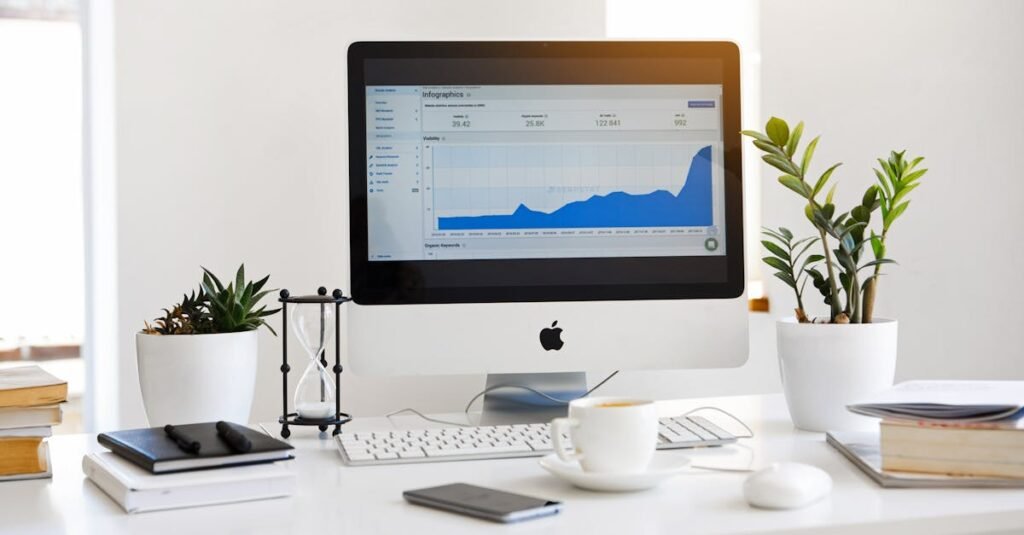
A clean, contemporary workspace featuring a desktop with analytics on the screen and plants for a fresh look.

Social Media Scheduling Tools: Save 10 Hours a Week

Welcome to 2026, the year social media management shifted from “manual posting” to “AI-orchestrated presence.” If you are still setting alarms to post on Instagram or manually resizing images for LinkedIn, you are losing more than just time—you are losing your competitive edge. Last year, we saw a massive fragmentation of the social landscape with the rise of decentralized platforms like Bluesky and the total integration of Threads into the business ecosystem. In early 2026, the challenge isn’t just “being active”; it’s managing a presence across seven or more platforms without burning out. The “Early 2026 Workspace Evolution” has introduced tools that do more than just schedule; they predict. Modern scheduling software now uses predictive analytics to suggest not just the time of your post, but the sentiment your audience is currently craving. Whether you are a solo creator or an enterprise lead, the right tool can literally give you back a full work day every week. This high-authority review compares the industry leaders to help you find your 10-hour-a-week savior. — 2026 Performance Comparison: Top Scheduling Tools Tool Starting Price (2026) Unique Selling Point (USP) GrowthPick Rating Hootsuite $99/mo The “OwlyWriter” AI Content Suite 4.7 / 5.0 Buffer $6/channel/mo Ultra-simple, cost-effective scaling 4.5 / 5.0 Sprout Social $199/user/mo Enterprise-grade AI Social Listening 4.9 / 5.0 Later $18/mo Visual-first planning for TikTok & Reels 4.6 / 5.0 SocialBee $29/mo Evergreen content recycling automation 4.4 / 5.0 — Hootsuite: The AI All-Rounder for Mid-Market Teams Hootsuite has successfully navigated the “AI Revolution” of 2025 to emerge as the most versatile tool for professional marketing teams in 2026. The platform’s flagship update for January 2026 is the “Predictive Campaign Orchestrator.” It no longer just fills a queue; it analyzes your competitors’ real-time performance and suggests “white-space” opportunities where your brand can dominate the conversation. The OwlyWriter AI has evolved significantly since last year. It can now take a single blog URL and instantly generate a 10-post social campaign, complete with tailored captions for LinkedIn, Threads, and X, plus a script for a TikTok video. For teams managing 10+ accounts, Hootsuite’s “Streams” feature remains the best way to monitor brand mentions and industry trends in one consolidated dashboard. While the $99 starting price is steep for beginners, the time saved in content ideation alone justifies the investment for growing businesses. Buffer: The Solopreneur’s Strategic Shortcut If your goal is to “set it and forget it” without a massive monthly bill, Buffer remains the gold standard. In early 2026, Buffer has stayed true to its mission of simplicity while adding a “Unified AI Assistant” that helps repurpose content across channels with one click. Its “Essentials” plan at $6 per channel is unbeatable for creators who only focus on three or four key platforms. One major 2026 upgrade is the “Threads & Bluesky Native Scheduling.” While other tools were slow to adopt the decentralized APIs, Buffer’s 2026 interface treats Bluesky with the same priority as Instagram. For a solo business owner, Buffer’s “Start Page” (a high-converting link-in-bio tool) combined with its scheduler creates a complete marketing ecosystem. It won’t give you deep social listening like Sprout, but it will save you those 10 hours without a complex learning curve. — Sprout Social: The Data Powerhouse for Enterprise Sprout Social is not just a scheduling tool; it is a business intelligence platform. In 2026, Sprout has integrated “AI Triage” into its Smart Inbox. It automatically categorizes incoming messages from all social channels into “Leads,” “Customer Support,” or “General Engagement,” allowing your team to respond to high-priority items instantly. The January 2026 “ROI Attribution” update is the platform’s crown jewel. It links directly with your CRM (Salesforce, HubSpot) to show exactly how much revenue a specific social post generated. While the $199 per user price point is the highest in the market, for an enterprise team, the ability to prove the financial value of social media is priceless. If your brand relies on data-driven decisions and complex team approval workflows, Sprout Social is the only choice. Later: Visual Planning for the Short-Form Video Era With TikTok and Instagram Reels dominating the 2026 attention economy, Later has carved out a niche as the premier Visual Scheduler. Its “Linkin.bio” tool has become a full-scale mobile commerce engine, allowing users to shop directly from video posts. Later’s early 2026 “Visual AI Scripting” feature is a game-changer for creators. It analyzes trending audio on TikTok and suggests specific shot lists and captions to help your videos go viral. The drag-and-drop visual calendar allows you to see exactly how your Instagram grid or TikTok feed will look before you hit publish. For fashion, beauty, and e-commerce brands, this visual-first approach is more effective than the text-heavy interfaces of traditional schedulers. — Deep Dive: Which Tool Actually Saves the Most Time? To truly save 10 hours a week, a tool must automate three specific areas: Content Creation, Engagement, and Reporting. Automation of Creation: Hootsuite and SocialBee win here. SocialBee’s “Category-Based Scheduling” allows you to create “buckets” of content (e.g., “Educational Tips,” “Product Promos”) that automatically recycle evergreen posts, ensuring your feed never goes dark. Automation of Engagement: Sprout Social is the clear winner. Its AI-driven “Suggested Replies” can handle up to 60% of basic customer service inquiries, leaving your team free to focus on complex community building. Automation of Reporting: Hootsuite’s new “One-Click Branded Reports” for 2026 can be scheduled to arrive in your inbox every Monday morning, removing the need for manual data export and spreadsheet manipulation. — The Verdict: Who is This For? Winner for Startups & Solopreneurs: Buffer If you have a limited budget and need a tool that “just works,” Buffer is the winner. It is the most intuitive platform and allows you to scale your costs exactly as your business grows. Winner for Agencies & Mid-Market: Hootsuite For agencies managing multiple clients, Hootsuite is the winner. Its robust AI content generation and multi-stream monitoring allow one account manager to handle twice as many clients as they could

Social Media Scheduling Tools: Save 10 Hours a Week Read More »
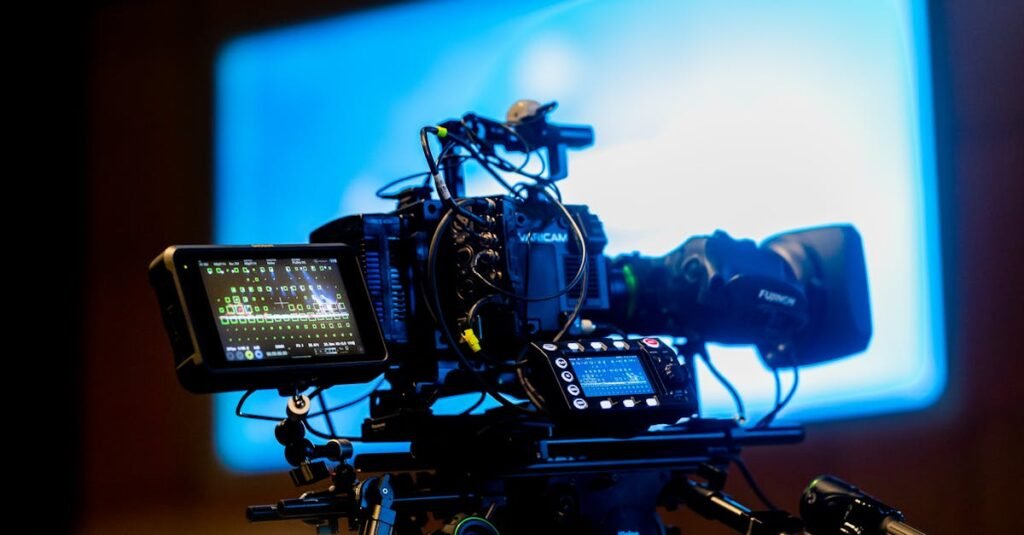
Close-up of a professional video camera setup in a studio environment with vibrant lighting.

The Rise of Video Marketing: Tools You Need to Start

As we navigate the first month of 2026, the definition of “video marketing” has undergone a radical transformation. Last year, 2025, was the year the industry moved from manual production to what we now call Autonomous Video Content. In this landscape, a “video” is no longer just a static file; it is a dynamic, multi-language, platform-optimized asset that finds its audience through predictive AI. If your brand is still debating whether to “start” video, you are effectively invisible to over 82% of internet traffic—the percentage of total global bandwidth now consumed by video content. The Early 2026 “Semantic Video Evolution” has introduced tools that can read a 3,000-word whitepaper and, in under 60 seconds, generate a fully edited 9:16 vertical video for TikTok, a 16:9 explainer for YouTube, and a personalized video message for your top 50 sales leads. The barrier to entry has vanished, but the barrier to relevance has shifted toward quality and personalization. To save you from the “software fatigue” of 2025, we have curated the essential toolkit for a high-performing video strategy in 2026. — 2026 Video Marketing Powerhouse Table Tool Starting Price (2026) Unique Selling Point (USP) GrowthPick Rating CapCut Desktop Free / $9.99/mo (Pro) AI Script-to-Video & Prosumer Speed 4.9 / 5.0 HeyGen $24/mo (Starter) Near-Perfect Multilingual Voice Cloning 4.8 / 5.0 Descript $12/mo Text-Based Editing & AI “Underdub” 4.7 / 5.0 Vidyard Free / $19/mo (Pro) Sales-First CRM Analytics & Heatmaps 4.6 / 5.0 Wistia $19/mo Best-in-Class Lead Capture & Hosting 4.5 / 5.0 — The Creation Engine: Moving from Script to Screen in Seconds In early 2026, the most significant productivity gain has come from Generative Scripting. Tools like CapCut Desktop have transitioned from simple editors to full-scale “Content Laboratories.” Their January 2026 “Visionary 4.0” update now allows users to input a URL or a rough thought, and the AI handles the entire “A-Roll” assembly, including matching B-roll from an internal 8K stock library and generating a natural-sounding voiceover in over 30 accents. For small businesses, this eliminates the “blank page syndrome.” You no longer need to hire a scriptwriter or an editor for every social post. The ROI here is staggering; what used to take a creative team five hours now takes a solo marketer fifteen minutes. However, the caveat in 2026 is Authenticity. While CapCut can build the structure, the brands winning today are those that overlay their AI-generated frames with authentic, “lo-fi” human-shot footage to maintain trust. The Global Reach: HeyGen and the Death of Language Barriers One of the most disruptive trends of 2025 was the rise of Globalized Localism. In 2026, your potential market is no longer limited to your native language. HeyGen has pioneered a technology that doesn’t just dub your video; it clones your voice and adjusts your lip-syncing to match the target language perfectly. The early 2026 “Cultural Nuance” update in HeyGen now goes a step further by adjusting the tone and gestures of the AI avatar to suit local cultural norms (e.g., using more formal language for Japanese markets versus a casual tone for Brazilian audiences). For a startup looking to expand into Europe or Asia, this tool eliminates the $10,000+ cost of professional localization. You record once in English, and HeyGen distributes it in Spanish, Mandarin, and Hindi—maintaining your brand’s unique voice across all of them. — The Workflow Optimizer: Editing Video Like a Word Document If you find traditional “timeline” editing intimidating, Descript is your 2026 savior. Descript treats video like a text transcript. If you want to delete a sentence from your video, you simply highlight the text in the transcript and hit delete. The video magically adjusts. In January 2026, Descript launched its “Dynamic Underdub” feature. If you made a mistake in your recording (e.g., you said “2024” instead of “2026”), you can simply type the correct word into the transcript, and Descript’s AI will regenerate that specific audio segment using your cloned voice, perfectly matching the room’s acoustics. This feature alone saves hours of re-recording. For educational content and podcasts, Descript has become the industry standard, effectively turning every team member into a proficient video editor. The Conversion Specialist: Vidyard vs. Wistia While tools like CapCut and HeyGen focus on creation, Vidyard and Wistia focus on conversion. In the sales-driven environment of 2026, “views” are a vanity metric; “engagement depth” is the gold standard. Vidyard (The Sales Engine): Vidyard’s early 2026 CRM integration (Salesforce/HubSpot) allows sales reps to see exactly when a prospect watched a video and which parts they re-watched. Imagine calling a lead exactly 30 seconds after they finished watching your “Pricing” video—that is the level of precision Vidyard offers. Wistia (The Marketing Hub): Wistia is the superior choice for lead generation on your website. Its 2026 “Interactive Turnstile” feature allows you to embed polls and lead-capture forms directly inside the video player. It also provides the best SEO metadata injection, ensuring your videos rank on the first page of Google’s new AI-driven search results. — Strategic Verdict: Which Tool Should You Choose? Winner for Social Media & Small Business: CapCut + Buffer If you need to pump out high volumes of TikToks, Reels, and YouTube Shorts on a budget, CapCut is the winner. Its AI features are miles ahead of the competition for “prosumer” level content. Pair it with a scheduler like Buffer for a complete 2026 workflow. Winner for B2B Sales & Enterprise: Vidyard If your videos are meant to close five-figure deals, Vidyard is the winner. The depth of analytics and the ability to track individual viewer behavior makes it an indispensable part of the modern sales stack. Winner for Global Creators & Education: HeyGen + Descript If you are building an international brand or an online course, the combination of HeyGen (for localization) and Descript (for fast editing) is the “God Mode” of 2026 video marketing. You will save hundreds of hours and thousands of dollars in production costs. — Frequently Asked Questions (FAQ) 1. Do I still need a professional

The Rise of Video Marketing: Tools You Need to Start Read More »

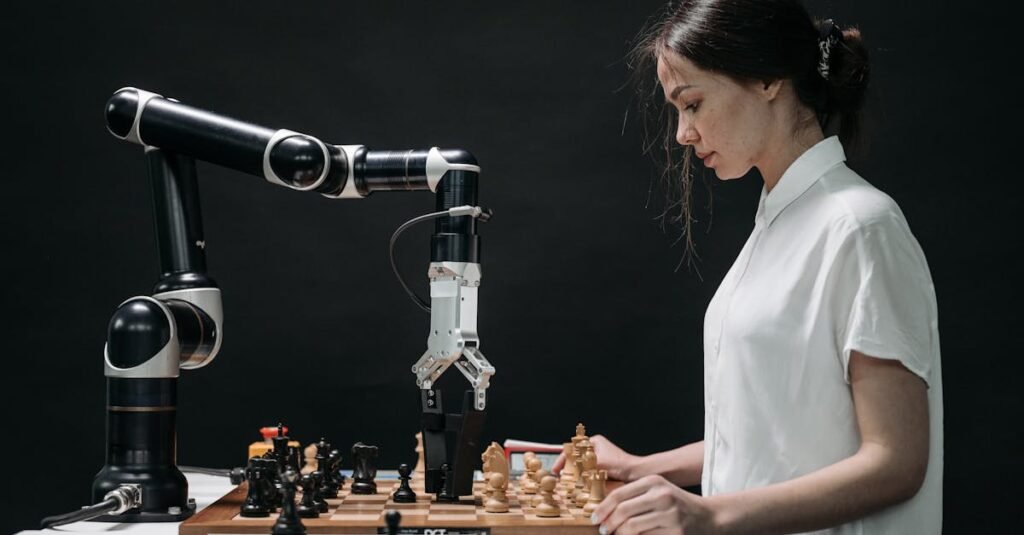
A robot and woman engage in chess, showcasing technology and strategic thinking.

Content is King: How AI is Changing Copywriting

In 1996, Bill Gates famously declared “Content is King.” For three decades, that crown remained unchallenged. But as we stand in January 2026, the kingdom is in the midst of a violent coup. The sheer volume of synthetic content produced over the last 24 months has created a “Content Inflation” crisis. When an AI can generate a technically perfect, 2,000-word whitepaper in eighteen seconds, the value of that content—by itself—drops to zero. In the tech landscape of 2026, content isn’t king anymore. Context and Identity are the new monarchs. The role of the copywriter has shifted from being a producer of words to a “Strategic Prompt Architect” and “Human-in-the-Loop” (HITL) director. High-growth teams are no longer hiring writers to fill pages; they are hiring them to engineer the intelligence that guides their brand’s narrative across the agentic web. 1. From Penmanship to Prompt Engineering The “blank page” problem was solved in 2024. By 2026, the challenge is no longer creation, but refinement. Professional copywriting has moved up the stack of abstraction. Today’s senior copywriters spend 70% of their time crafting “Brand Neurons”—deeply detailed, multi-layered system prompts that define a brand’s tone, psychological triggers, and historical context. The Master Prompt Framework: Instead of writing a single ad, copywriters now build “Logic Chains.” These prompts instruct models (like GPT-5.2 or Claude 4.5) to analyze a customer’s specific stage in the funnel and generate 1:1 tailored copy in real-time. Stylistic Consistency: Using tools like Sintra AI or Jasper’s Brand IQ, writers feed years of proprietary marketing data into “Brand Brains,” ensuring every AI-generated tweet or email sounds indistinguishable from the founder’s own voice. Constraint Management: The skill is now in the negative prompt—telling the AI what *not* to say to avoid the generic, “hope this finds you well” tropes that modern spam filters now automatically flag as low-value synthetic noise. Pro Tip: In 2026, a “Senior Copywriter” is essentially a Creative Technologist. If you aren’t using advanced chaining or Retrieval-Augmented Generation (RAG) to ground your AI in specific customer case studies, your output will be relegated to the “unqualified” pile. 2. GEO: Writing for the “Summarizer,” Not the Click Search Engine Optimization (SEO) as we knew it is dead. It has been replaced by Generative Engine Optimization (GEO). With the ubiquity of AI Overviews, the goal is no longer to get a user to click on your link; it is to get the AI agent to cite your brand as the primary authority in its summary. To win at GEO, copywriters must adopt a “Data-Scrapeable” style. This means prioritizing clarity and factual density over flowery prose. Your content must be structured in a way that an LLM can easily ingest and reference. Semantic Density: Using high-value “Entity Tags” within the copy to ensure AI models recognize your expertise in a specific niche. The “Social Proof” Signal: Integrating real-time quotes from Reddit, Discord, and verified community forums directly into the copy. AI agents in 2026 prioritize “human sentiment” signals when choosing which sources to trust. Citation-Driven Copy: Structuring blog posts as “Answer Engines.” Each H2 heading should be a question that the subsequent paragraph answers definitively within the first 40 words. 3. The E-E-A-T Defense: “Proof of Personhood” As the internet is flooded with “perfect” AI text, the most valuable asset a brand has is flawed, human experience. Google’s 2026 algorithms are aggressively penalizing “smooth” content. Copywriters are now doubling down on the “Experience” part of E-E-A-T (Experience, Expertise, Authoritativeness, and Trustworthiness). The “Humanity” Checklist for 2026: First-Person Narratives: “We tried this and it failed” is now more valuable than “How to succeed.” Vulnerability is a trust signal that AI cannot authentically replicate. Multimodal Verification: Top-tier copy is now bundled with short, raw video clips or voice notes. A 1,000-word article with a 30-second “Author Commentary” video performs 42% better in trust metrics than text alone. Opinionated Positioning: AI is designed to be neutral and helpful. Humans are designed to be biased and provocative. In 2026, copy that takes a polarizing stand generates more “Attribution Value” because it cuts through the neutral noise of synthetic summaries. 4. Agentic Personalization: The “Living” Copy In the 2026 tech landscape, landing pages are no longer static. They are agentic. When a user lands on a site, an AI agent analyzes their previous interactions (permission-based) and “rewrites” the copy in real-time to match their specific pain points. The copywriter’s job here is to create the Variable Matrix. You don’t write one headline; you write a logic-based framework that allows the AI to swap out benefits, social proof, and pricing models based on the visitor’s profile. Pro Tip: Use “Zero-Party Data” hooks—interactive mini-quizzes embedded in the copy—to feed the AI real-time info about the user. The copy should then morph to address the quiz results immediately. This “Morphing Copy” has seen a 38% higher conversion rate than traditional A/B testing. 5. The Shift to “Done-For-You” (DFY) Strategy Clients in 2026 no longer pay for “blog posts” or “email sequences.” They pay for outcomes. The democratization of high-quality AI copy means the “implementation” is cheap, but the “strategy” is priceless. The modern copywriter acts as a Chief Content Officer (CCO) for their clients, managing the AI-human workflow rather than just grinding out drafts. Workflow Orchestration: Setting up the automated pipelines that move an idea from a Slack voice note to a multi-channel campaign (Email, Vids, LinkedIn, SEO) using a single AI-driven system. Quality Assurance (QA): Acting as the final “ethical filter” to ensure the AI hasn’t hallucinated facts or inadvertently used biased training data. Attribution Tracking: Focusing on “Branded Demand” rather than raw traffic. The goal is to make people search for the brand by name, which is the ultimate defense against AI displacement. Future Outlook: Late 2026 and the “Voice-First” Web By the end of 2026, we anticipate the dominance of Voice Search Agents (Project Astra and beyond). Copywriting will pivot once more toward Aural Branding. How does your brand “sound” when read by a personal AI assistant?

Content is King: How AI is Changing Copywriting Read More »

Close-up of a network patch panel with connected cables in a data center, showcasing organized cable management.

SEO Basics: A Checklist for New Bloggers

The era of “tricking” an algorithm is over. In January 2026, the barrier to entry for a new blogger isn’t technical complexity—it is informational density and verifiable identity. With Google’s Search Generative Experience (SGE) and the rise of Generative Engine Optimization (GEO), search engines no longer just link to answers; they synthesize them. For a new blog to survive, it must transition from being a “page of text” to a “credible entity.” If you are launching a blog this year, your competition isn’t just other bloggers; it’s the AI-generated summary that sits atop the search results. To rank, you must provide the residual value that an LLM (Large Language Model) cannot: lived experience, unique data, and a distinct perspective. This guide outlines the fundamental SEO architecture required to compete in the 2026 search landscape. 1. The Foundation: Semantic Research and Entity Mapping Keyword research has undergone a fundamental shift. In 2026, we focus on entities and intent clusters rather than individual phrases. An “entity” is a well-defined person, place, or thing that search engines recognize as a distinct concept. Your goal is to tell Google exactly what entity your blog represents. Beyond Search Volume: High volume often means high AI saturation. Target “conversational long-tail” queries—questions like “How does [Topic A] affect [Niche B] for beginners?”—which are more likely to trigger an AI citation than a broad term. Topical Authority Clusters: Don’t write random posts. Choose one “Pillar” topic and write ten “Supporting” posts that link back to it. This signals to Google that you aren’t just a generalist, but a specialized authority. Search Intent Mapping: Analyze the SERP (Search Engine Results Page). Does the AI summary provide a list, a paragraph, or a video? Your content format must match the dominant intent identified by the algorithm. Pro Tip: Use the “People Also Ask” and “Related AI Prompts” sections at the bottom of Google to find the hidden semantic gaps that your competitors are ignoring. These are the “niche edges” where new blogs find their initial traction. 2. On-Page 2.0: Optimizing for AI Synthesis Modern on-page SEO is no longer about keyword density; it’s about data scannability. When Google’s crawler visits your page, it is looking for structured information it can extract for its AI Overviews. The “Answer Box” Intro: Within the first 50 words of your post, provide a direct, objective answer to the primary query. This increases your chances of being the “featured citation” in an SGE summary. Hierarchical Headings (H2-H4): Use your headings to map out a logical argument. Each H2 should be a sub-topic that could stand as its own mini-article. Micro-Content Formatting: Use <ul> and <ol> liberally. AI models prefer structured lists over dense prose when generating summaries. 3. The E-E-A-T Pillar: Verifying the “Human” With the internet flooded by synthetic content, Google has doubled down on Experience, Expertise, Authoritativeness, and Trustworthiness (E-E-A-T). For a new blogger, this is your most significant hurdle—and your greatest opportunity. The Verified Author Profile: Your “About” page is now a ranking factor. Link to your LinkedIn, your professional certifications, and other reputable sites where you’ve been mentioned. First-Person Narrative: Use phrases like “In my experience,” “During my testing,” or “I discovered.” Google’s latest quality rater guidelines specifically prioritize content that demonstrates first-hand experience. Source Transparency: Cite your data. If you quote a statistic, link to the original 2025 or 2026 study. Outbound links to high-authority domains act as “trust signals” for your own site. Pro Tip: Embed a short, 30-second video of yourself discussing the post’s main point. This “multimodal signal” is a massive trust-builder that generic AI-content sites cannot easily replicate. 4. Technical SEO: The “Interaction” Standard In 2026, Core Web Vitals are the baseline, not the advantage. The newest metric, Interaction to Next Paint (INP), is now the primary gauge of site health. If your blog feels “clunky” on a mobile device, your rankings will suffer regardless of content quality. Mobile-First Architecture: Design your blog on a phone first. Ensure that your “Tap Targets” (buttons and links) are far enough apart to prevent mis-clicks. Next-Gen Media: Use WebP or AVIF image formats and implement “Lazy Loading” for all media. Fast load times are critical for retaining the short attention span of users coming from AI search. Schema Markup (JSON-LD): Implement Article, FAQ, and Person schema. This is the “hidden language” that tells search engines exactly who you are and what your content is about. 5. The “Search Everywhere” Strategy SEO in 2026 is no longer just about Google. It is about cross-platform visibility. Users are searching on TikTok for tutorials, Reddit for “real” opinions, and ChatGPT for advice. Your blog must sit at the center of this ecosystem. The “Reddit/Forum” Signal: Participate in niche communities. When your blog URL is mentioned in a relevant Reddit thread, it sends a powerful “Prominence” signal to Google’s algorithm. Branded Search Demand: Encourage readers to search for your blog by name (e.g., “[Blog Name] + SEO Checklist”). High branded search volume tells the algorithm that you are a trusted destination, not just a random landing page. AI Agent Readiness: Ensure your robots.txt file is updated to allow (or strategically disallow) specific AI crawlers from OpenAI and Anthropic, ensuring your content is available for the next generation of AI personal assistants. Future Outlook: The Agentic Web in Late 2026 As we approach the end of 2026, we expect the rise of Personal AI Agents that perform “pre-search” for users. These agents will aggregate the top 5 sources on a topic and present a personalized brief. To stay relevant, your blog must be one of those 5 sources. This requires moving away from “SEO tricks” and toward Original Data Ownership. Sites that publish original research, unique case studies, and proprietary visuals will dominate the rankings. Conclusion: Quality is the New Quantity The “volume game” is dead. You cannot out-publish an AI. Success for new bloggers in 2026 depends on your ability to be better, not faster. One high-authority, deeply researched post that solves

SEO Basics: A Checklist for New Bloggers Read More »

Close-up of dual computer monitors with green coding interfaces in a dark room, highlighting cyber security themes.

Email Marketing Trends: How to Increase Open Rates

The inbox of 2026 is no longer a simple chronological list; it is a highly curated, AI-shielded battlefield. With the rollout of Intelligent Inboxes across Gmail and Apple Mail late last year, the traditional “blast and pray” methodology hasn’t just become inefficient—it has become a deliverability suicide mission. Today, open rates are governed by predictive relevance and verified trust signals rather than catchy puns or artificial urgency. As we navigate the first quarter of 2026, the performance gap between top-tier marketers and the rest of the industry has widened into a chasm. According to recent data, the top 10% of senders are seeing open rates north of 54%, while those clinging to 2024 strategies are struggling to break 15%. To win the attention of the modern, AI-assisted consumer, you must pivot from being a broadcaster to being a precision strategist. 1. Predictive Send-Time Optimization (pSTO) In 2026, the concept of a “best time to send an email” is a relic of the past. Sending a newsletter at 10:00 AM on Tuesday to your entire list is the fastest way to get buried under the “Summarize All” AI filters. Instead, leading platforms now utilize individualized pSTO. Individual Habits: Your ESP (Email Service Provider) now analyzes when each specific subscriber is most active. If “Sarah” typically checks her professional mail at 8:42 AM, your campaign arrives at 8:40 AM. If “John” catches up on Sundays, his version of the same email waits. Contextual Awareness: Modern AI models now account for time zones, local holidays, and even real-time weather data to determine if a message is “disruptive” or “welcome.” The Result: Brands utilizing individual-level timing have reported a 22% average increase in unique opens compared to batch-sending. Pro Tip: Stop looking at aggregate open times. If your CRM doesn’t offer “Wait until recipient’s optimal window” as a logic step in 2026, it’s time for an RFP (Request for Proposal) to find a new vendor. 2. The Rise of “Zero-Party” Personalization Third-party cookies are a ghost of the tech world’s past, and even first-party behavioral tracking has been heavily restricted by the latest OS-level privacy updates. The solution in 2026 is Zero-Party Data—information the customer explicitly and voluntarily shares with you. Hyper-personalization is no longer about just inserting a {{first_name}} tag. It is about Dynamic Content Blocks that adapt in real-time. For instance, an apparel brand’s email might change its hero image based on the specific “style persona” the user selected in a gamified onboarding quiz two weeks ago. How to implement this: Interactive Quizzes: Use AMP (Accelerated Mobile Pages) for Email to embed short, 3-question surveys directly in the body. Preference Centers: Move beyond “Opt-out.” Give users a “Snooze” option or the ability to choose “Educational content only” versus “Offers.” Intent Signals: Trigger emails based on “Micro-moments”—like a user spending more than 10 seconds hovering over a specific product image on your site without clicking. 3. Trust Signals: BIMI and VMC are Table Stakes In 2026, the primary filter isn’t the user; it’s the Inbox Gatekeeper AI. To even reach the eyes of your subscriber, your email must pass a rigorous “Trust Audit.” BIMI (Brand Indicators for Message Identification) has evolved from a luxury to a technical requirement for high-volume senders. When a user sees your verified brand logo next to your subject line, it acts as a visual “Verified” badge. This single visual cue can increase open rates by up to 12% by reducing “inbox friction”—the subconscious split-second where a user wonders if an email is phishing or spam. Pro Tip: Ensure your DMARC policy is set to p=reject. In 2026, Google and Apple’s filters are increasingly relegating any sender with a “quarantine” or “none” policy to the promotions or spam tabs, regardless of how “clean” the list is. 4. The “Messaging-App” Aesthetic The long-form, image-heavy newsletter is dying. In the 2026 tech landscape, users are habituated to the rapid-fire communication of messaging apps. High-performing emails now mirror this snackable design. Dark Mode Optimization: 68% of mobile users in 2026 use system-wide Dark Mode. If your email has a white background that “flashes” when opened, it’s an immediate delete. Text-to-Image Ratio: Heavy images are slow to load on 5G/6G edge networks and are often blocked by privacy-centric mail clients. Prioritize HTML-based buttons and clean typography. The “One CTA” Rule: Data shows that emails with a single, clear, thumb-friendly call to action (CTA) have a 30% higher open-to-click transition than those with multiple competing offers. 5. Agentic Responses and Micro-Moment Triggers The most significant trend of 2026 is the shift from “Campaigns” to “Conversations.” With the integration of Gemini 4.0 and similar LLMs into marketing stacks, emails are becoming agentic. Instead of a standard “Abandon Cart” email, the system now analyzes why the cart was abandoned. Did the user exit at the shipping cost page? The AI generates a 1:1 response addressing that specific friction point. These are no longer “templates”; they are generative interactions that feel like a personal follow-up from a dedicated account manager. Future Outlook: Late 2026 and the “Zero-Inbox” AI By the end of this year, we expect the wide-scale adoption of Autonomous Inbox Managers. These AI agents will read emails on behalf of the user and provide a 30-second daily briefing. For marketers, the “Open Rate” metric will evolve into the “Inclusion Rate”—the percentage of times your brand’s value proposition makes it into the AI’s daily summary. To survive this transition, your subject lines must be optimized for Semantic Search rather than just human curiosity. The AI needs to know exactly what value is inside the “envelope” to deem it worthy of the user’s attention. Conclusion: From Broadcast to Relationship Increasing open rates in 2026 isn’t about finding a “secret” word to bypass filters. It is about radical relevance. Every email you send that isn’t opened is a withdrawal from your “Brand Equity” account with the inbox provider. If you continue to send irrelevant content, your “Reputation Score” will eventually drop to zero. Your next step: Conduct

Email Marketing Trends: How to Increase Open Rates Read More »